Tuesday, July 2, 2013

Making Filé with Sassafras Leaves

Filé
Imagine the world as we know it has ended, or you are stranded in the woods.  You have shot a squirrel and picked some dandelion greens to make a soup.  It is going to be a rather thin and uninteresting soup to be sure.  However, if you know how to make Filé (fee-lay). you will be able to turn that thin soup into something thicker and far more interesting.  All you need to be able to do is recognize a Sassafras Tree.

Filé is a spice made and used primarily by the Cajuns of Southern Louisiana and invented by the Choctaw Indians. It's used as a thickener and flavoring in soups and stews. If you have had Gumbo, you have probably eaten it already. People often think that Filé is a combination of spices due to its interesting flavor.  Surprisingly, it has only one ingredient, dried Sassafras leaves.

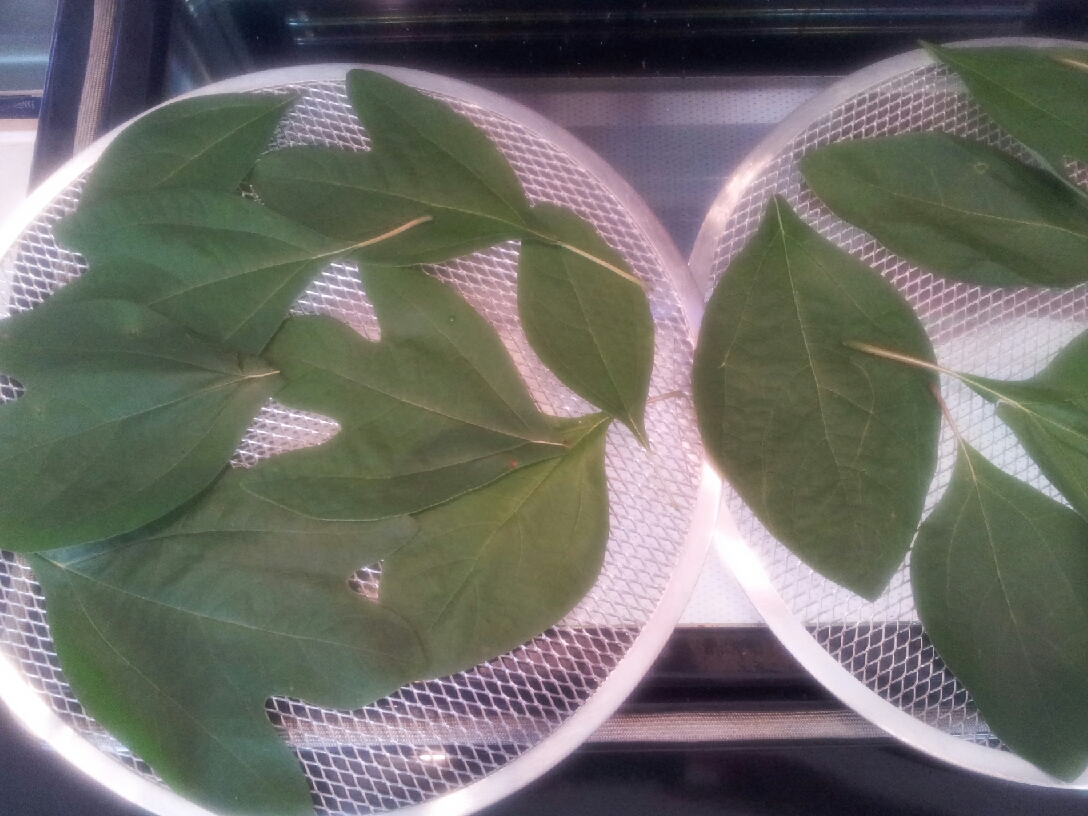
The Sassafras tree is fairly easy to recognize.  The leaves on the tree comes in three different varieties.  These shapes include a simple oval, a three-lobed maple leaf shape, and a two-lobed mitten shape.  The Mulberry tree also has these three shapes, however, the Sassafras has smooth margins and no teeth and also has a spicy smell when crushed.  If you pull the leaf off and immediately smell where the leaf is severed, it should have a spicy almost citrous scent.  Sassafras is a medium-sized tree with irregularly furrowed, red-brown bark.

To make Filé, you can pluck branches off and hang to dry in a warm area like a garage or attic.  Your branches will be crispy dry in about a week.  You can also pluck individual leaves off and dehydrate them in a dehydrator or oven.  See how I dehydrate HERE.  Do not dehydrate your leaves in the sun as it will dull the color of the leaves.

Once dry, hand crush the leaves in a bowl.  It will suddenly seem like a much smaller amount at that point.  Fill your mortar 3/4 full and using a pestle, crush into a powder.  It takes about five minutes.


Strain through a fine mesh strainer to remove any large pieces and twigs.


Store in an air tight container away from sunlight.  To use, add several teaspoons to your soup after you have taken the soup away from the heat.  Do not add it while cooking.  Be frugal in your initial use as often people add too much in the beginning.  You can also use it as a condiment for individuals to add to their soup.

As a point of interest, sassafras root and bark are have been sources of the flavoring for root beer in the past. The roots also make a wonderful tea which I drank often as a child.  Native Americans used Sassafras as a blood purifier.  Some locals that I have known use the root in tea to help get over colds and fevers. Herbalists use Sassafras for arthritis, gout and rheumatism.

Parts of the sassafras plant contains safrole, which may be carcinogenic according to the FDA.  In the 1960's, researchers isolated this compound of Sassafras and fed it to rats in ridiculously high concentration (not found in nature) and they developed cancer (go figure, keep in mind that they had not even decided that cigarettes caused cancer at this point so my faith in this determination is fair at best).  You can also find safrole in more common herbs such as black pepper, basil and nutmeg.  However, just to be on the safe side, the leaves of Sassafras do not contain safrole so they are safe for making Filé!

For you locals, there is a Sassafras tree behind Home Depot on Royal Oaks in Franklin, TN.

Shared At:
Homestead Barn Hop
Natural Living Monday
Backyard Farming Connection
Eco-Kids Tuesday
Frugal Days, Sustainable Ways
The HomeAcre Hop
 

Monday, June 24, 2013

Dehydrating Curly Dock, Plantain and Watercress

My recent foraging trip: Curly Dock Seeds, English Plantain, Curly Dock Leaves and Yucca Flowers.

I have a secret.  I am not very good with fresh vegetables.  They have a tendency to rot in my fridge.  I will put them in the vegetable drawer with great expectations and two weeks later I rediscover them only to end up in my compost bin.  You would think someone interested in foraging and plants would be on top of this but, alas, it is not so.  I have, however, discovered a way that I can easily preserve my greens and use them on a regular basis.  While I do poorly at sauteing them when they are fresh, I am great at throwing a handful into spaghetti, chili or a crockpot of beans.  Even my kids will eat them then.

If you have a dehydrator, then you should follow the directions of the dehydrator.  I do not have one.  I use my oven.  Fortunately, it has a convection option which makes it easier, but you can also do it with bake though it may take longer.  First, I pick, wash and cut up the greens.

Curly Dock leaves ready for dehydrating.

I then put them on a metal pizza pan that has small holes in it.  I recently purchased mesh pizza pans on eBay that I think will work even better.


Turn your oven on to convection at 130 degrees.  It takes between 3 to 4 hours for me to completely dehydrate greens.  You should mix them up every hour.


Store in a jar and toss a handful into whatever you are cooking to add nutrition and a bit of flavor.  I have found that greens lose some of their really strong flavors when you dehydrate them.  I personally like that as it is easier to put into recipes.  Also, if you are working with greens that are stringy, like plantain, it no longer is an issue once dehydrated.  The leaves easily crumble.  Remember to check the bottom of your oven after dehydrating for any stray dehydrated greens.  It makes an unpleasant odor when you use it to cook with next.  Guess how I know?


You can dehydrate most greens in this way.  Curly Dock seeds should be destemmed and and rinsed in several changes of water and drained.  I do not take the husk off of the seeds.  Layer them on your pan and placed in a 170 degree oven until completely dried.  Mix them up every hour or so.  Once dried, I have found that a blender works the best to grind up for use in baked goods.  However, certain grain mills would probably work better.  My hand crank grain mill would have taken me all day to grind a few cups. I also tried my food processor which did basically nothing.  In my experience, you can add two tablespoons of ground curly dock seed into most bread recipes without changing the flavor much and you add nutrition and fiber.  There are recipes that use Curly Dock flour as a primary ingredient which I will share later.

Adding dried watercress to pasta sauce. Yumm.

Sunday, June 16, 2013

Foraging Around Franklin, Tennessee!

While the kids have been in day camp this week, I have had the opportunity to explore my area to look for new foraging spots.  It is amazing that I have lived here nearly ten years but have never really looked at my surroundings.  You can find so many new things when you really look around you.  I can't wait until everything is in season and ready to be picked!

Wild Grapes at Publix!

Elderberry Blooms at an overgrown empty business lot.

Mullein beginning to flower on Royal Oaks Blvd.

Burdock at Harlinsdale Park.
Staghorn Sumac grove on Mallory Lane.

There are four different spots in Franklin that you can pick wild blackberries!


Pork Chops with Caramelized Onion and Thistle

Thistle is growing abundantly around here, and since every part of it is edible, I wanted to experiment more.  My first attempt, Lemon Thistle Martini, was certainly a winner in my book.  The stems of the plant, once the prickles are removed, actually are similar to celery though the taste is more bland which is not unpleasant but crisp and clean.  It is really easy to remove the prickles with a glove and sharp knife.  Younger plants will have a more tender stem and that is what you should seek.  It can be used in salads or any way that you would use celery.

Scraping the Prickly Outer Layer Off the Stems

Thistle Stems

The leaves can also be used once the prickly edges are removed.  My leaves were not very large so the final result was mostly the central stem.


The final result of cleaning the leaves of their sharp edges:


Pork Chops with Caramelized Onion and Thistle

The flavor of thistle leaves reminds me of turnip greens, but sturdier.

Ingredients:

6 pork chops
butter
1 small onion, chopped
1 cup chopped thistle leaves with prickles removed
garlic salt

Directions:

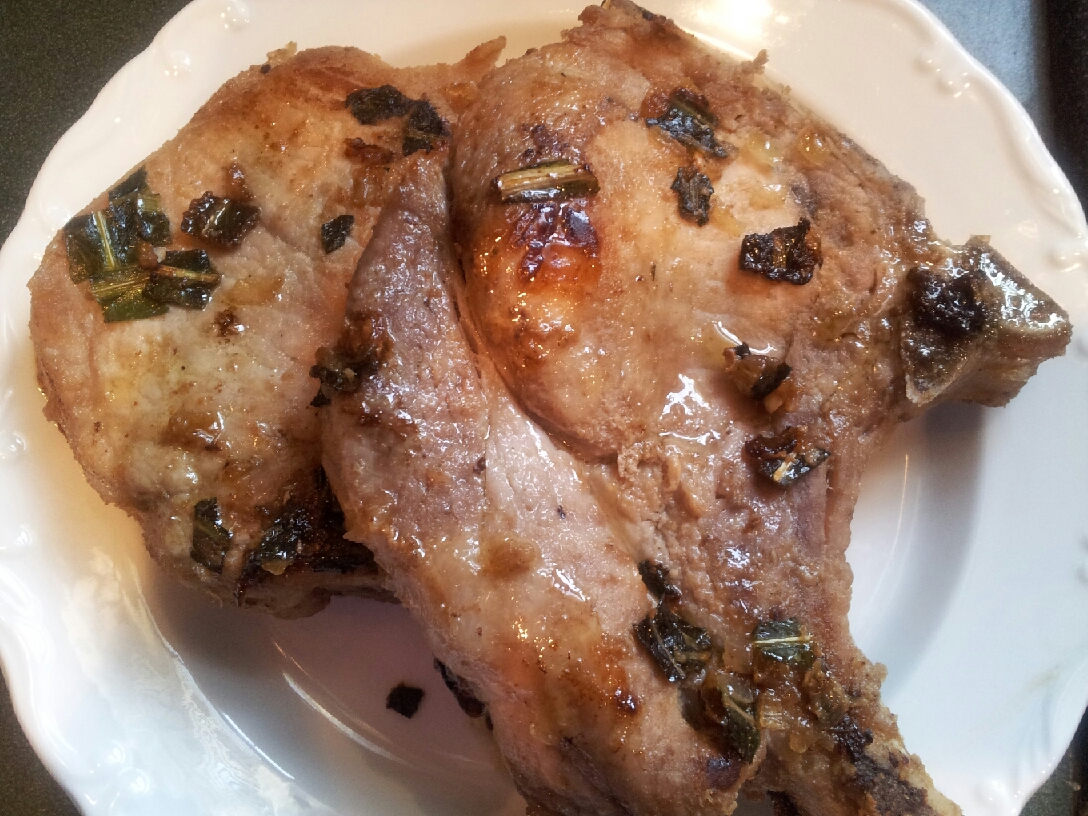
In a large frying pan, melt enough butter to fry the pork chops.  Add the pork chops.  In between the pork chops add the onion and thistle.  Sprinkle with garlic salt.  Fry until pork chops are browned and onion and thistle is caramelized.


I would definitely make this again.  The flavor was great!  However, the work involved in preparing the thistle leaves was too cumbersome for the meager amount that it produced.  A couple of nice things about thistle that I do like are that it is easy to identify and prolific in this area.  You would not starve if you are willing to put in the work!

Wednesday, June 12, 2013

Wild Food at Whole Foods!

I wanted to share these pictures I took at Whole Foods today in Franklin, TN.  It is amazing that you can pick both of these practically outside the door of the store.  Apparently they had to get them from California and Georgia.  I suspect the local wild variety has much less pesticides and is probably better for you.  Oh, and don't forget, free!


Friday, June 7, 2013

Lemon Thistle Martini


Every year about this time I see thistle taking over parks and empty lots all over my area.  I have always liked this plant because I find it to be beautiful.  Occasionally I would stop and carefully pick a bouquet as a centerpiece for my table, and until now, that has been the only reasonable use.

In my treasure hunt to find local, edible and natural food sources, I discovered that yes, thistle is edible but it is not for the veggie wimp.  You will need something like these:


Gloves were a present from my lovely husband!  They are thicker than regular rubber gloves.

Historically, thistle has been used to treat liver, kidney and gall bladder problems. It helps to protect the liver from damage and improve some symptoms of hepatitis. Research has also suggested that it has anti-cancer effects by reducing the blood supply to tumors and preventing cancer cells from dividing and reproducing. 

It originated in the Mediterranean region and likes dry sunny areas. In middle Tennessee it seems to grow everywhere.  All parts of the plant are edible though the seeds are generally what are used in current times.  The leaves can be trimmed of their prickles and used as a spinach substitute.  In the past these were commonly used in salads, soups and pies.  The seeds can be roasted and used in a coffee fashion once ground. The mid rib of the larger leaves can also be cut out and used in recipes.

So far, here is my favorite recipe for thistle!  This makes a very vibrant green drink.  My super picky kids liked the juice (before Vodka, of course)!

Lemon Thistle Martini


Ingredients:

10 small thistle leaves or 5 large leaves
4 cups cold water
1 green apple sliced with seeds removed
4 T sugar
2 lemons sliced, seeds mostly removed
Vodka

Directions:

Add ingredients except Vodka to blender and blend well.  It is optional to remove the skin of the lemons.  If you prefer less tart, then remove before blending.


Strain out the pulp. 

Cool color, huh? I strained the bulk out first and then strained again.


In a martini glass, add a shot of Vodka and ice (or chill with a shaker).  Fill with mixture.  Enjoy!


Other potential recipes worth trying:

Buttered Sow-Thistle
Stir-fried Sow-Thistle and Pork
Braised Thistle Stem
Sweet Chilli Thistles
Thistle Stroganoff

Friday, May 31, 2013

Totally Awesome Mulberry Cobbler!


Two weeks ago I was out at my favorite foraging haunt when I discovered these beauties!  They were not quite ripe yet then but yesterday about a third were perfect.  I had never picked mulberries before.  I started by plucking the berries off of the limbs.  The wind was blowing strongly, and I thought that the "just shake the branch" technique which I had read about would not work.  It was slow going, and I was ready to try something else.  I grabbed a branch and gently shook.  It rained mulberries!  I got out my old sheet and spread it out.  Just so you know, mulberries will stain anything they land on.  After about 15 minutes of shaking and moving around the tree, I had about two pounds of perfect fresh mulberries.

Raining Mulberries
Contrary to the children's song, Mulberries are trees and not bushes. The berries are actually not berries but clusters of fruit like grapes that are fused together.  There are no hard seeds in them like other similar looking berries.  Apparently to those who enjoy the fruit, every Mulberry tree is slightly different.  I visited another tree in Nashville several days ago and the berries were hard, sharp and white, not at all like these but still in the same family.  Some people dislike mulberries because of the sweet, low acidic and occasionally bland taste.  However, different trees have different flavors.  When you find one you like, you win the jackpot!  The tree I found has excellent flavor, sweet with a hint of tartness making it what I consider a fantastic find!
Mulberries will turn your fingers purple!

Herbalist claim that mulberries are cognitive enhancers that improve memory and vision. Mulberries have significantly high amounts of phenolic flavonoid phytochemicals called anthocyanins. These berries have shown to have potential health effects against cancer, aging and neurological diseases, inflammation, diabetes, and bacterial infections. Mulberries also contain resveratrol, another polyphenol flavonoid antioxidant, also found in grapes and supports heart health. They are also excellent sources of vitamin C and iron, among other vitamins.

Mulberries are often used for jams, jellies, wine, syrup, sauces and in a variety of desserts.  You can freeze, can or dry them.  I made cobbler with my mulberries and froze the rest while I wait for the wild crab apples to finish growing so I can make jelly.


It is optional whether you want to remove the small stem.  I eat them with the stem. It is soft and tasteless, at least right after you pick them!  If they will affect the presentation of the desert, recruit some kids to help as it is time consuming.  Cut stems off as close to the berry as possible.

Mulberry Cobbler Recipe

Ingredients:

1/3 cup butter
1 ½ cup all purpose flour
1/3 cup granulated sugar plus 2 tablespoons of sugar
1 cup milk
2 tsp baking powder
2 cups of mulberries (removing stem optional)

Directions:

Preheat oven to 325 degrees. Add the butter to baking pan and place in the preheated oven until butter is melted. In a separate bowl combine dry ingredients. Mix in milk until smooth. Pour mixture in to baking pan containing the butter and drizzle berries on top. Sprinkle with two tablespoons sugar. Bake 40-45 minutes or until golden brown. 

This is great served with vanilla ice cream.