Thursday, November 20, 2014

Making Acorn Flour!


If you have ever processed black walnuts you may be hesitant to ever attempt to use other foraged nuts. I am happy to report that acorns are much easier to use! This was a good year for acorns as not every year produces an abundance. It has been said that trees produce a lot in advance of a bad winter.  That remains to be seen!  I have noticed that it runs in a three year cycle, two being few nuts while the third being prolific.


You really want large nuts with small caps. The smaller the cap the less bitter due to tannin. Look for a white oak tree. It has the traditional oak leaf but with rounded edges. Unfortunately, all we have locally, that I can find, is red oak. Red oak works but will require a longer soak to remove the bitterness.

Collect your acorns.  Try to collect as soon as they fall and not after they have sat on the ground for a long time. Examine the nut to be sure the shell is intact and has no holes. Some people will put the nuts in water and toss those that float as those may have worms.  Spread out and allow to dry for several weeks or you can speed this up with a dehydrator or low oven. This shrinks the nut and makes it easier to shell.

Use a nut cracker and remove the shells. Shells are thin and crack easily.


Acorns generally come out whole without much effort. Acorns should have a brown exterior with a white interior. Throw out any that are black.  Have a knife handy to cut suspect acorns in half to be sure they are good.


Soak whole nuts overnight to soften. Drain. Liquid will have tannins in it.


Blend nuts with some water into smaller pieces but not into powder size. You want to increase the nut surface to leach the bitterness out but not so small that straining becomes difficult.


Place nuts in a strainer that fits into another larger pot. I used a steamer pot that has holes on the bottom which I placed into a large pot.  This way you can just lift the pot out to strain and add more water for the next soak.


Soak in hot water but not boiling.  I used hot tap water.  If you boil it, it will change the texture.  It will cook the starch and will no longer clump together in baking.  Change the water frequently. I planned it for a day when I was already going to be in the kitchen canning so about every hour for a day the water was changed. Taste for bitterness. By the end of the day, it was nearly bland enough. I set it to soak overnight and by the next day it was ready. Strain


Spread out nuts to dry. You can use a dehydrator or warm oven. I used my oven set at 115 degrees. It took a day to completely dry.
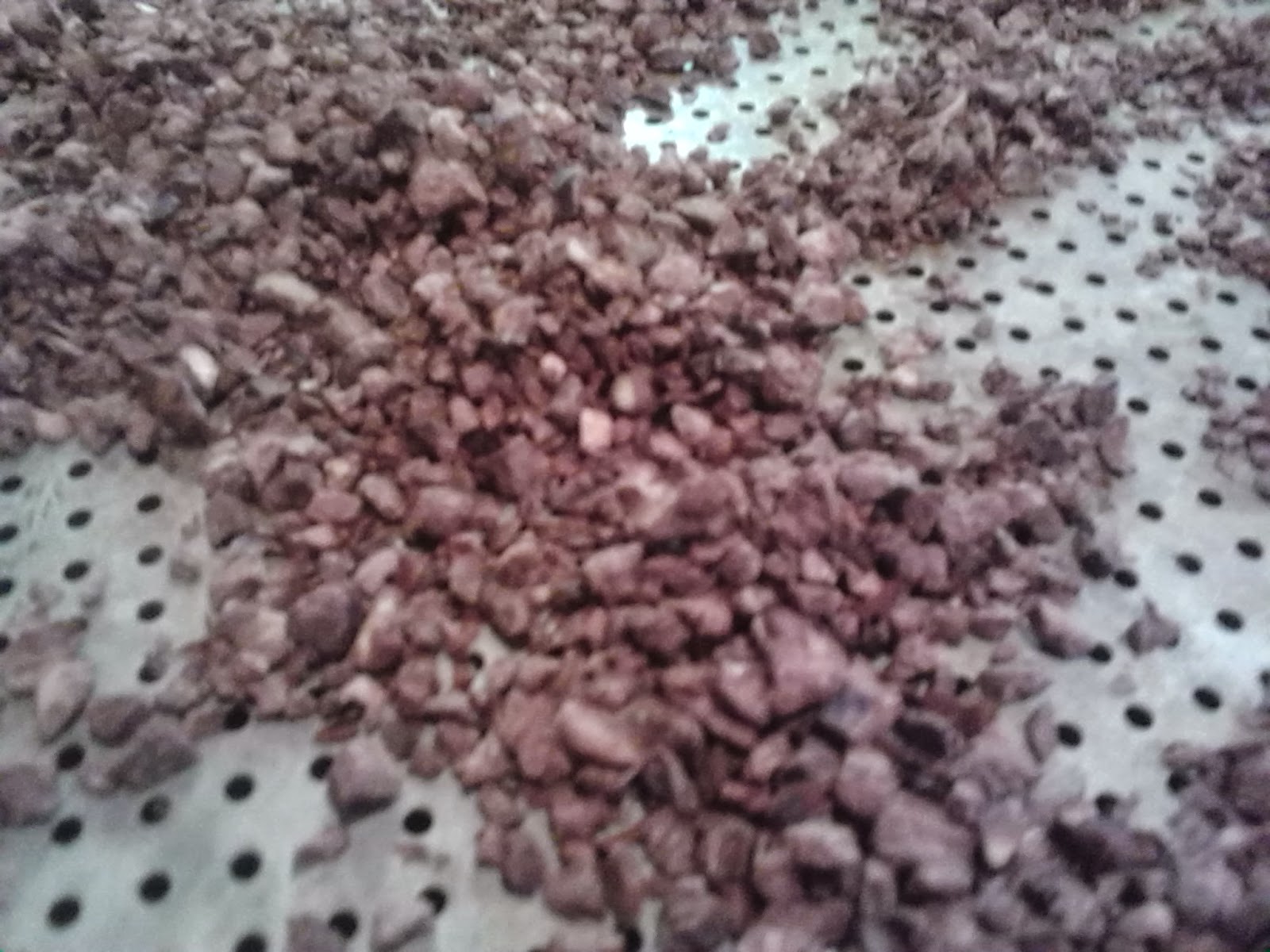

Once dry, grind into powder. A small coffee grinder works great!

 
Store in your refrigerator or freezer for best results.


This was far less labor intensive than processing black walnuts which is a dirty and time consuming process with little to show in my opinion. Acorns take time but are easy to process and produce a beautiful flour.

If you are local to Nashville, Tennessee, check out Vanderbilt's campus for an abundance of acorns.  The acorn is the school emblem for a reason.

Thursday, November 13, 2014

Shredding Pumpkin for Baking!

Here's something to do with your uncut leftover carving pumpkins. Did you know you can shred and freeze pumpkin? You can then bake with it like zucchini. Pumpkin Pineapple Bread recipe below!

Shredding pumpkin is easy.  Cut sections off of your pumpkin.  Slice into inch slices.  Slice off the gut side.  Cut into inch squares.   Slice off the skin side. 


Put into your food processor and when it is filled. process until it is all shredded. 


Fill your freezer bag and freeze!


Pumpkin Pineapple Bread 

Ingredients:

2 cups finely shredded pumpkin
3 eggs
1 cup vegetable oil
1 8 oz can of crushed pineapple, drained
2 teaspoon vanilla extract
3 cups flour
2 cups sugar
2 teaspoons baking soda
1/2 teaspoon baking powder
1 teaspoon salt
1 1/2 teaspoon cinnamon
3/4 teaspoon ground nutmeg

Directions:

Mix wet ingredients together in a large bowl. In a separate bowl, mix all dry ingredients together. Add dry ingredients to wet and mix until just combined.

Grease two loaf pans. Pour batter equally into each. Bake at 350 for 50-60 minutes. Test with a fork to be sure it is done. Fork should come out clean.

Wednesday, October 29, 2014

Baked Cassava with Za'atar Seasoning!

Cassava aka Yucca Root

Recently I had the pleasure of visiting with my friend David of Florida Survival Gardening.  He has a fantastic yard filled with all kinds of wild and cultivated plants.  He also sells many of these so you may want to check him out!  His blog is filled with a wealth of foraging and gardening ideas.

Photo of us from Florida Survival Gardening!
He was kind enough to give me a Cassava root, Manihot esculenta aka Yucca, for cooking and a stick from the plant which I immediately put in water when I got home and it is now rooting!  It may not survive Tennessee winters but it is a nice experiment.  I will probably put it out in the spring to see how it grows.

Cassava is a really cool looking plant and the huge roots are wonderful starchy tubers.  The plant is of the spurge family (Euphorbiaceae) from South-American origin. You can not eat the roots raw, so they must be boiled for at least 20 minutes before you put them in a dish. They taste like a nutty potato.  When you first pick the root, the skin is easy to peel off.  Of course mine sat in the fridge for a week and took a little more time to peel off, but I was able to do it with my fingers.


Cut the root into sections and boil for 20 minutes.


After boiling the sections, you must cut into wedges and then cut the center fibrous part off.  You want the outer white part.


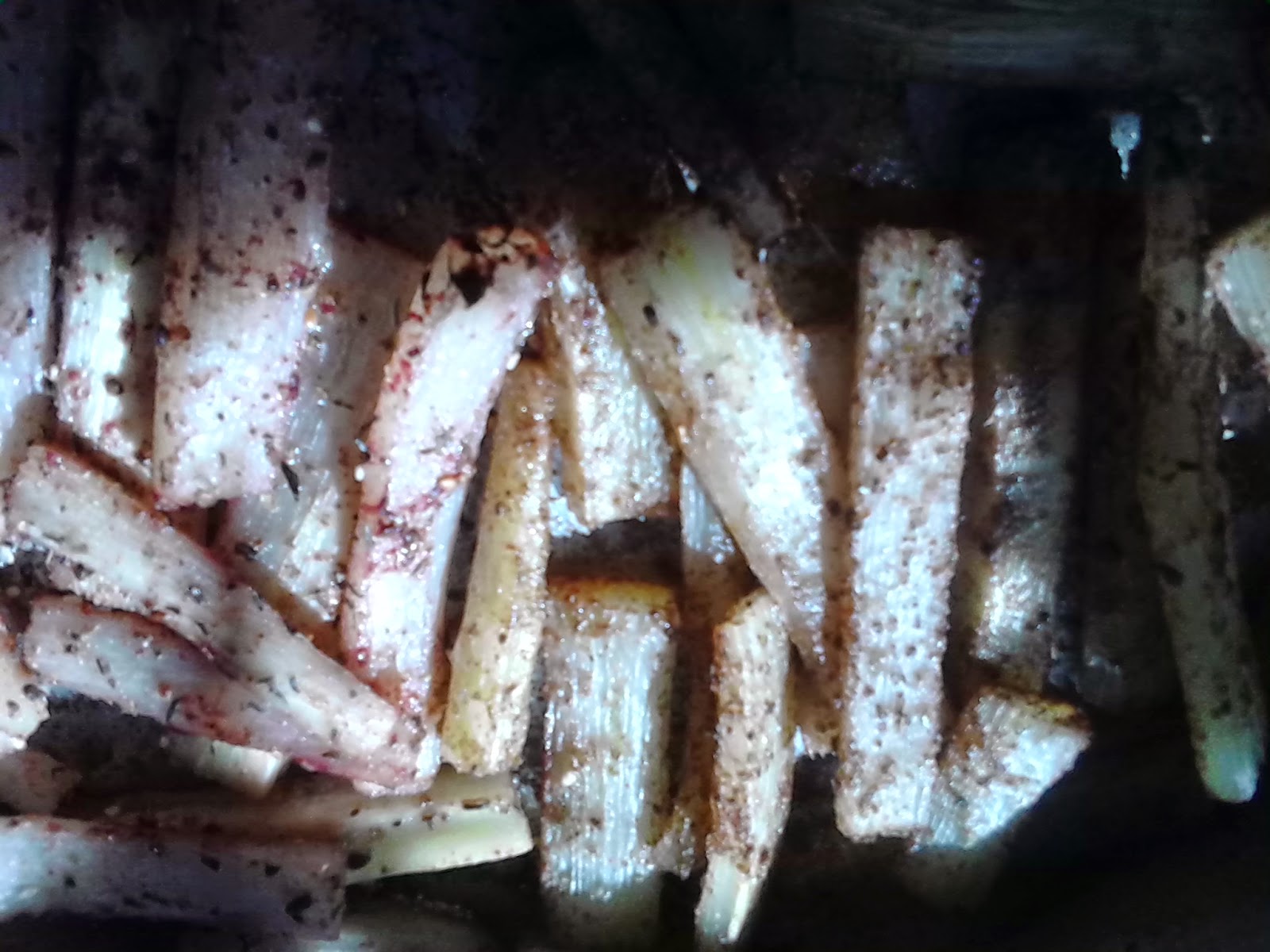
Coat the strips of Cassava root with olive oil.  Add seasoning of choice.  I tried traditional and wild herb Za'atar seasoning.


Bake at 400 degrees for 20 minutes or until desired crispness of edges.


Both varieties turned out great.  It is wonderful served with your favorite sour cream or yogurt sauce.


Za'atar Seasoning Made with Wild Staghorn Sumac

 
Staghorn Sumac, Rhus typhina, is commonly found in the Mid-South.  It is a picturesque tree that produces fuzzy, bright red berries in a pyramidal cluster.  The tree grows fast, is drought tolerant and does not generally have pest and disease problems.  It may appear as a shrub.  You can often find these trees along woodland edges.  You will most often find several trees together as it self-propagates from root suckers.  The species has pinnately compound leaves with serrated edges. It shares a genus with Poison Sumac, Rhus vernix, but the Staghorn berries are not poisonous and do not resemble the Poison Sumac variety (white berries).  Fall, particularly early September, is the best time to collect these berries.  There is also a non-fuzzy related variety, Smooth Sumac, Rhus glabra, that can be used, but I have yet to find one in Tennessee.

Sumac is often used to make a lemonade-like drink.  The outside of the berries have a citric taste to them and when soaked in water, creates a resemblance to lemonade.  The berries are also often used to create a popular middle eastern spice called Za'atar.  The citric taste to the berries is the primary attraction to this fruit so you do not want to wash it or pick it just after a rain.

I picked my Staghorn Sumac berries in September and I have let them dry for the last month.  They are fairly easy to remove from the branch.  If I had to describe the texture I would call them fluffy. 


They grind well in a small coffee bean grinder. 


You can use the ground sumac as an herb without adding anything additional if you would like.  I made a traditional Za'atar mixture and a wild herb variety with commonly found plants in the area that I dehydrated when they were in season.  I like the results both equally.  The traditional variety has roasted sesame seeds which really stands out while the wild herb variety has a fresh greener flavor.  Both have a nice citrus bite that would be great on meat, fish or vegetables.

Traditional on left and Wild Herb Za'atar on right

Traditional Za'atar Mix

Ingredients:

1/2 cup dried ground Staghorn Sumac
3 tablespoons thyme
2 tablespoon roasted sesame seeds
3 tablespoons marjoram
3 tablespoons oregano
2 teaspoons course sea salt

Mix all of the ingredients in a bowl. Store in a cool dark location.


Wild Herb Za'atar Mix


Ingredients:


1/2 cup dried ground Staghorn Sumac
2 tablespoons dried ground Perilla
2 tablespoons dried ground Ground Ivy
2 tablespoons Filé (ground Sassafras leaves)
2 tablespoons dried ground white Clover flowers
2 teaspoons course sea salt

Mix all of the ingredients in a bowl. Store in a cool dark location.


Enjoy both varieties as a seasoning on meat, fish or vegetables.  It can also be mixed with oil to make a dipping sauce.

Thursday, October 16, 2014

October Foraging in Tennessee!

What can you find right now?  Here are a few easy to find wild edibles.

Curly Dock, Rumex crispus, is loving the cooler weather! Now is a great time to pick and dehydrate for the winter.  Curly Dock is a rhubarb relative in the Buckwheat family.  It is high in beta-carotine, vitamin C and zinc.  It was a popular edible during the Great Depression. Occasionally one will show up in my garden and it does so much better than my other vegetables!
Wood Sorrel, very lemony and great for sauces.
Amaranth, probably Amaranthus spinosus, grows like crazy everywhere. Leaves and seeds are edible. Amaranth seeds are a popular high end edible found at Whole Foods!
Amaranth close up.
English Plantain also likes the cooler weather.  Edible as a green though stringy but great for making salves.
Black Walnuts are dropping everywhere!
Rose Hips are starting to ripen.  They have more vitamin C than oranges!
Thistle, cut the thorns off and the center of the leaves are tasty.  Wear gloves!
Blackberry leaves make good tea and are medicinal.  It has been used to treat diarrhea.
More Dock!  It loves to grow in infertile soil and fields.  It shoots up a large amount of red seeds which can also be used as a flour.
Mulberry leaves for tea.  Great for diabetics.  It blocks sugar from entering into your bloodstream.
Motherwort.  Makes a calming tea. Red berries in the background are honeysuckle and not edible.
Motherwort close up.  Nature's Prozac.
Haws (Hawthorn berries), great for jams, jellies, and wine.  Great for the heart.  It strengthens the heart muscle and increases the blood flow from the heart.  It has also been shown to lower blood pressure.  Flowers and leaves can be used to make tea.
Acorns.  They vary in the amount of tannins which makes them bitter.  The smaller the cap the less bitter.  White oaks are generally less bitter.  White Oak leaves have tradition Oak shape but rounded edges not sharp.  Soak repeatedly in hot but not boiling water to remove tannins.  Can be used to make acorn flour.
More Haws from a different tree.  Hawthorn trees are variable with different shaped leaves and different size of berries. There are over 280 known species. Look for the thorns.
Bradford Pear fruit.  Can be used to make jelly, wine or a nice sweet and sour sauce.  Very tart.
Crab Apples are still available!
More crab apples, though much smaller.
Maypops, Passionflower fruit, are starting to fall to the ground ripe. Fruit can be used to make jelly while the leaves and flowers can be used in tea.  They have been used traditionally as a sleep aid and a calming influence.


What have you found growing this time of year?


Thursday, October 2, 2014

Bradford Pear Sweet and Sour Sauce!

Last year I made Bradford Pear Jelly for the first time.  I liked it but thought at the time that the recipe didn't take full advantage of the natural tartness of the Bradford Pear fruit.  I've had a year to come up with a perfect use, and I believe I have done it!

Bradford Pear Sweet and Sour Sauce

Ingredients:

1 gallon baggie of Bradford Pears (about 8 cups after stems removed)
1 whole pineapple, skinned, cored, and chopped small
2 cups chopped peppers (red, green or yellow)
1 onion chopped
1 1/2 cups white vinegar
4 T soy sauce
6 cups sugar
1 cup clear jel
1 cup of cold water (to mix with clear jel for thickening)

Directions:

Rinse Bradford pears and cut stem off.


Place in pot.  Fill with water to above fruit.  Boil until soft, crushing fruit to open.  Refill water as needed to maintain level.  Simmer 1-2 hours for best result.

Not very pretty while cooking but will make a lovely color when sugar is added to the juice!

Strain for juice in jelly bag or several times through a fine mesh strainer.  Measure liquid and add water if necessary to equal five cups.

Add liquid to stock pot along with pineapple, peppers, onion, vinegar, soy sauce and sugar.  Bring to a boil and simmer 30 minutes.


Meanwhile mix clear jel and cold water.  Add to mixture and simmer an additional 10 minutes.  Ladle into prepared jars and water bath 35 minutes.


Makes 6 - 7 pints.