Showing posts with label Sassafras. Show all posts

Wednesday, June 18, 2014

Mid-South June Foraging

This month is like the "Get ready, set..." because next month will be the "Go!"  Fruit and berries on the trees are growing and ripening!  Starting in July, blackberries and crab apples will be ready for picking and it will be a month of canning!  This goes all the way to August and September with different things ripening every week.

Here's what you can see right now:

Elderberry blooms!  The flowers can be used for jellies, syrups, wine and for making sodas (my son is doing this now!).  Scout these out now so you can pick the berries in August.


Sassafras leaves.  These have a citrus smell to them and can be eaten in salads or dehydrated for tea or as an herb called File which is used in gumbo.
Grapes are forming.  Now is the time to locate them for picking in late summer.  You can use the leaves now.  They are great to can for dolmas all year long! If you are local, you can find wild grapes everywhere!
Red clover.  It shows up a little later than white clover.  It's great in salads, dried for teas, or made into flour.  It has numerous health benefits.  I rarely find this in large quantities so when you find a large patch, remember where they are!
Black walnuts are forming.  They are still small and green, perfect for gathering to make a tincture.  Traditionally this tincture has been used to remove parasites.  You can make it yourself by soaking premature black walnuts in vodka or you can buy it on Amazon for an arm and a leg!
Common Plantain.  Can be cooked like greens or made into an excellent salve.  I made a salve using plantain last year and it seems to fix everything on us and our pets! Great stuff!
Smartweed.  See Green Deane's great article on this lovely plant!
Kousa Dogwood.  These are forming now and a great time to locate these trees.  The balls will turn into a fruit.  It will turn red with an orange/yellow interior.  The texture is similar to parsimmons with a tropical flavor.
This was may favorite find this month!  Autumn Olive Bushes loaded with future berries.  I have passed this church for ten years.  I finally stopped and walked the enormous grounds and discovered that it is surrounded with just a ton of Autumn Olives!  Many would call these interloping noxious weeds because they were brought here, escaped and thrived, but I think they are fantastic.  The berries are like sweet tarts and super nutritious with 17 times the lycopene of tomatoes!  I can't wait until these are ripe!  The leaves are green on the outside and silver on the inside.  This makes it easy to spot these bushes from a distance because they appear green grey, a different color than surrounding vegetation.  The berries will be red with silver flecks on them.
Hackberries.  Eventually these will turn red, but look around now for accessible branches.  This one was found locally at my son's scout camp.  Indians used to grind these up and use as a seasoning for meat or for making pemmican.  You can also make a type of almond milk with the berries.  Check out this website with instructions.


View of the Harpeth River after several days of rain and just before another storm.  One of the best things about foraging often is the view!


Friday, March 14, 2014

Roasted Chicken with Bradford Pear Jelly Glaze!

Bradford Pear Jelly
Back in the fall when I was experimenting with Bradford pear fruit, I thought at the time that the jelly would make a really great glaze for meat.  It has a sweet and sour flavor that would make a great addition to pork or chicken.  I pulled a jar out tonight and gave it a shot.  It did not disappoint!  I would certainly make it again.  I added some crushed red pepper to give it some spice.  It also needed a green touch for contrast so I used parsley and ground filé (Sassafras leaves).  It was excellent.

Chicken Ready to Bake
Roasted Chicken with Bradford Pear Jelly Glaze

Ingredients:

10 lbs chicken leg quarters
1 cup Bradford Pear Jelly
1 T crushed red pepper
1 T green herb of choice (like parsley or filé)

Directions:

Place chicken in greased pan.  Put jelly in microwave for 30 seconds to liquify.  Brush meat with jelly.  Sprinkle seasoning on meat.  Bake at 350 degrees for 45-60 minutes.

Just Out of the Oven!

Monday, September 9, 2013

Foraging in Franklin!

These photos were taken in the last few days in and around Franklin, TN!  There are some great things in bloom the first week of September!

Concord Park, next to the Brentwood Library:

Perilla a.k.a Shiso
PawPaws
PawPaw Tree Bark
PawPaw leaves to help identification
Elderberries
Acorns
Black Walnuts

Kroger on 96:

Sassafras Leaves for making File
Wild Grapes!  Love these!
Harlinsdale:
Osage Orange, seeds can be eaten like sesame seeds
,
More Perilla a.k.a Shiso
Behind Home Depot:

Passion Flower Plant with Maypop Fruit

Tuesday, July 2, 2013

Making Filé with Sassafras Leaves

Filé
Imagine the world as we know it has ended, or you are stranded in the woods.  You have shot a squirrel and picked some dandelion greens to make a soup.  It is going to be a rather thin and uninteresting soup to be sure.  However, if you know how to make Filé (fee-lay). you will be able to turn that thin soup into something thicker and far more interesting.  All you need to be able to do is recognize a Sassafras Tree.

Filé is a spice made and used primarily by the Cajuns of Southern Louisiana and invented by the Choctaw Indians. It's used as a thickener and flavoring in soups and stews. If you have had Gumbo, you have probably eaten it already. People often think that Filé is a combination of spices due to its interesting flavor.  Surprisingly, it has only one ingredient, dried Sassafras leaves.

The Sassafras tree is fairly easy to recognize.  The leaves on the tree comes in three different varieties.  These shapes include a simple oval, a three-lobed maple leaf shape, and a two-lobed mitten shape.  The Mulberry tree also has these three shapes, however, the Sassafras has smooth margins and no teeth and also has a spicy smell when crushed.  If you pull the leaf off and immediately smell where the leaf is severed, it should have a spicy almost citrous scent.  Sassafras is a medium-sized tree with irregularly furrowed, red-brown bark.

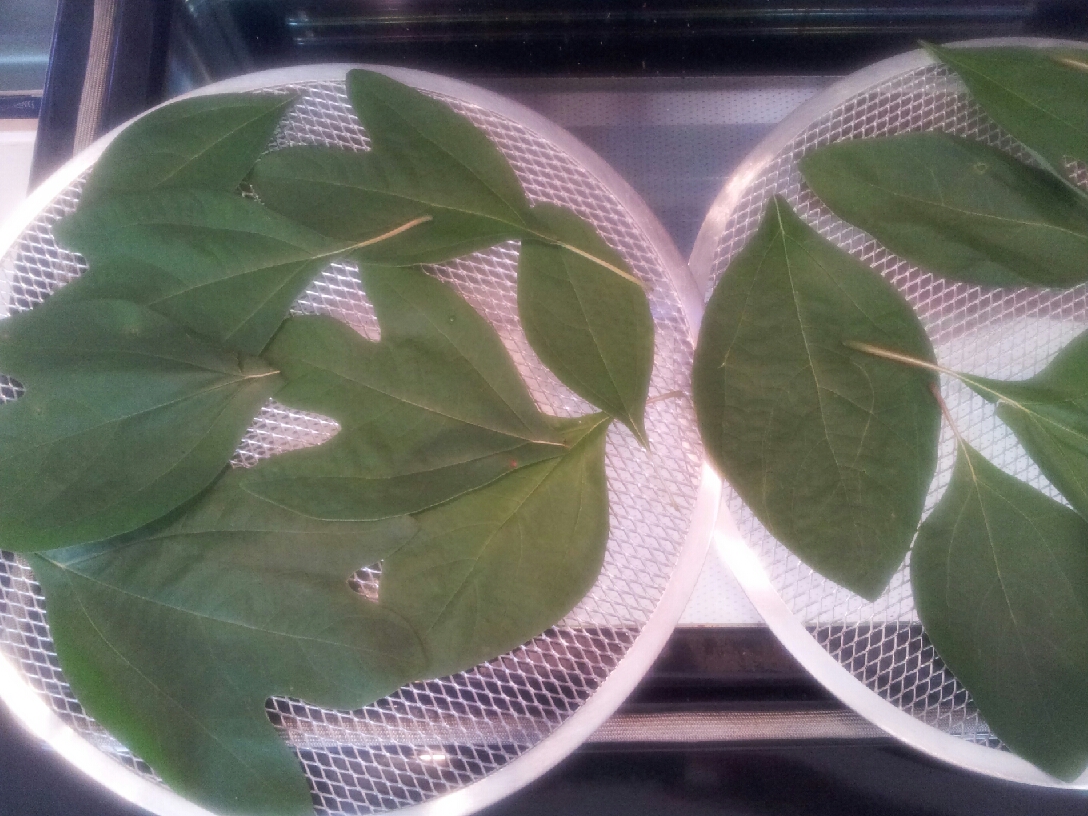
To make Filé, you can pluck branches off and hang to dry in a warm area like a garage or attic.  Your branches will be crispy dry in about a week.  You can also pluck individual leaves off and dehydrate them in a dehydrator or oven.  See how I dehydrate HERE.  Do not dehydrate your leaves in the sun as it will dull the color of the leaves.


Once dry, hand crush the leaves in a bowl.  It will suddenly seem like a much smaller amount at that point.  Fill your mortar 3/4 full and using a pestle, crush into a powder.  It takes about five minutes.


Strain through a fine mesh strainer to remove any large pieces and twigs.


Store in an air tight container away from sunlight.  To use, add several teaspoons to your soup after you have taken the soup away from the heat.  Do not add it while cooking.  Be frugal in your initial use as often people add too much in the beginning.  You can also use it as a condiment for individuals to add to their soup.

As a point of interest, sassafras root and bark are have been sources of the flavoring for root beer in the past. The roots also make a wonderful tea which I drank often as a child.  Native Americans used Sassafras as a blood purifier.  Some locals that I have known use the root in tea to help get over colds and fevers. Herbalists use Sassafras for arthritis, gout and rheumatism.

Parts of the sassafras plant contains safrole, which may be carcinogenic according to the FDA.  In the 1960's, researchers isolated this compound of Sassafras and fed it to rats in ridiculously high concentration (not found in nature) and they developed cancer (go figure, keep in mind that they had not even decided that cigarettes caused cancer at this point so my faith in this determination is fair at best).  You can also find safrole in more common herbs such as black pepper, basil and nutmeg.  However, just to be on the safe side, the leaves of Sassafras do not contain safrole so they are safe for making Filé!

For you locals, there is a Sassafras tree behind Home Depot on Royal Oaks in Franklin, TN.

Shared At:
Homestead Barn Hop
Natural Living Monday
Backyard Farming Connection
Eco-Kids Tuesday
Frugal Days, Sustainable Ways
The HomeAcre Hop